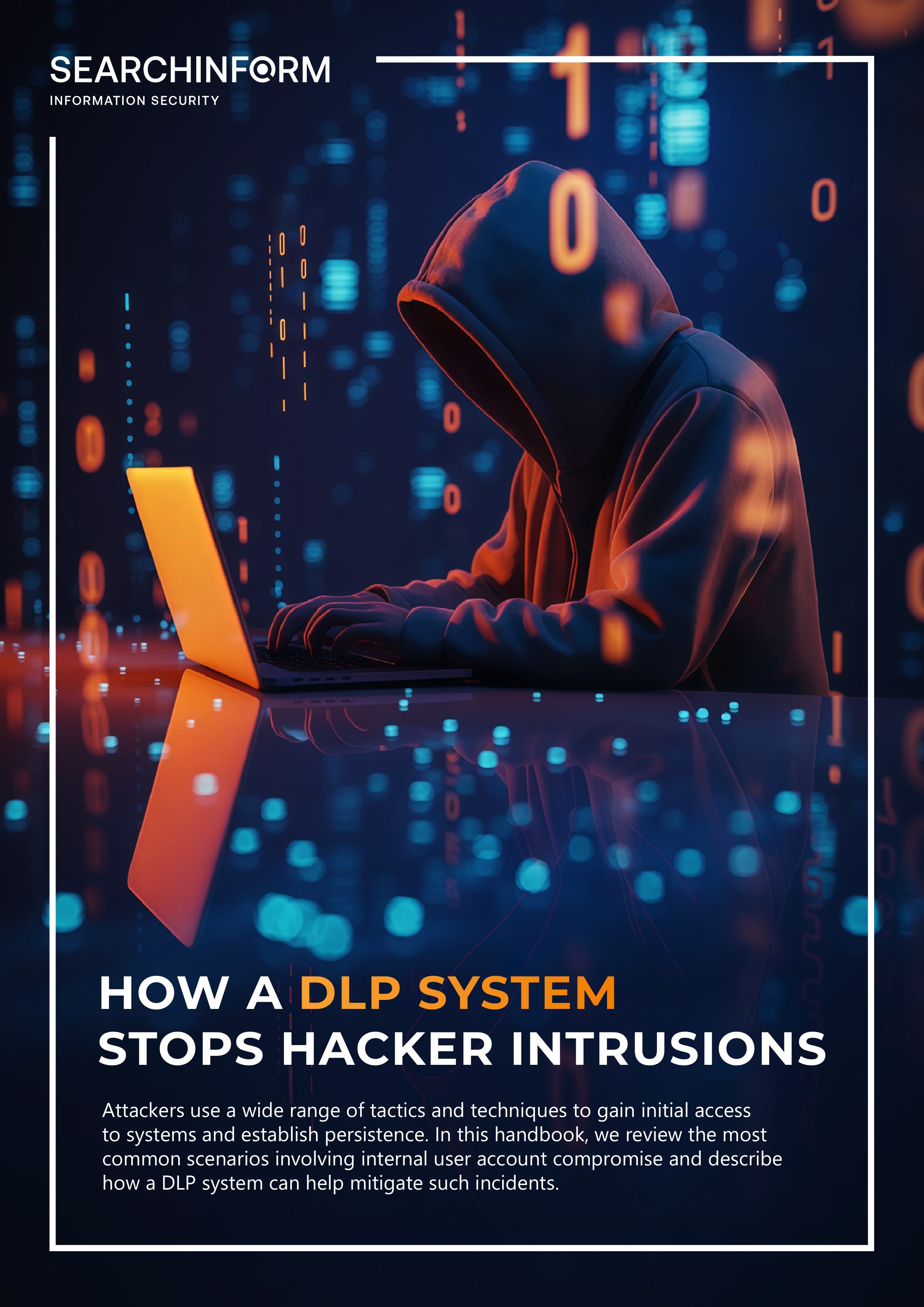
How DLP Systems Prevent Hacker Intrusions and Data Breaches
Many hacker intrusions start by exploiting legitimate user access — through stolen accounts, remote desktop sessions, or unnoticed data transfers. Traditional security tools often miss these actions because they look like normal employee behavior.
This handbook explains how Data Loss Prevention (DLP) systems help identify and stop such attacks.
What you’ll discover:
- The most common hacker intrusion scenarios involving internal user account compromise
- How attackers steal data via third-party cloud services and external platforms
- Why remote desktop sessions are a high-risk channel for manual data exfiltration
- How scripts and malware exploit remote access to automate data theft
- How DLP systems detect abnormal behavior, prevent data leaks, and support incident response
Download the full handbook by filling out the form below to learn how DLP prevents human-centric cyber threats.

Download
our practices-and-use-cases
with practical advice
 Subscribe to get helpful articles and white papers.
We discuss industry trends and give advice on how to deal with data leaks and cyber incidents.
Subscribe to get helpful articles and white papers.
We discuss industry trends and give advice on how to deal with data leaks and cyber incidents.


SearchInform uses four types of cookies as described below. You can decide which categories of cookies you wish to accept to improve your experience on our website. To learn more about the cookies we use on our site, please read our Cookie Policy.
Necessary Cookies
Always active. These cookies are essential to our website working effectively.
Cookies does not collect personal information. You can disable the cookie files
record
on the Internet Settings tab in your browser.
Functional Cookies
These cookies allow SearchInform to provide enhanced functionality and personalization, such as remembering the language you choose to interact with the website.
Performance Cookies
These cookies enable SearchInform to understand what information is the most valuable to you, so we can improve our services and website.
Third-party Cookies
These cookies are created by other resources to allow our website to embed content from other websites, for example, images, ads, and text.
Please enable Functional Cookies
You have disabled the Functional Cookies.
To complete the form and get in touch with us, you need to enable Functional Cookies.
Otherwise the form cannot be sent to us.

Subscribe to our newsletter and receive a bright and useful tutorial Explaining Information Security in 4 steps!

Subscribe to our newsletter and receive case studies in comics!